


Our Training Approach
At ICENA we are committed to creating training spaces that are inclusive, engaging and empowering. Our aim is to support participants to develop their knowledge, confidence and skills so that they feel able to create meaningful culture change within their organisations.
We recognise that everyone learns differently, has had different experiences of education and brings unique needs and preferences into the room. Because of this, our training is designed to be flexible, accessible and responsive. We take a trauma-informed approach, which means we pay attention to the emotional impact of our content and create environments that prioritise safety, choice, empowerment and respect.

Experiential and Inclusive Learning
We do not replicate the “banking model” of training, where the trainer is positioned as the sole authority. Instead, we use experiential learning, an approach that invites participants to actively engage through doing, reflecting and applying knowledge in real-world contexts. This helps to break down hierarchies in the training room and values the expertise and lived experience that everyone brings.
Because learning styles differ, our sessions are structured to support kinesthetic, auditory, visual, and reflective learners. You will find a balance of group discussion, practical activities, visual prompts, audio clips and opportunities to write or reflect quietly. Everyone will also receive a workbook containing the key information and tools covered in the session, which you can take away and continue to use after the training.

A Consent-Based Space
As a consent-based organisation, everything in the training room is an invitation, not an obligation. Participation is encouraged but never forced. Alongside group work, we always provide individual reflective activities for anyone who prefers to engage in that way.
Setting Up the Room
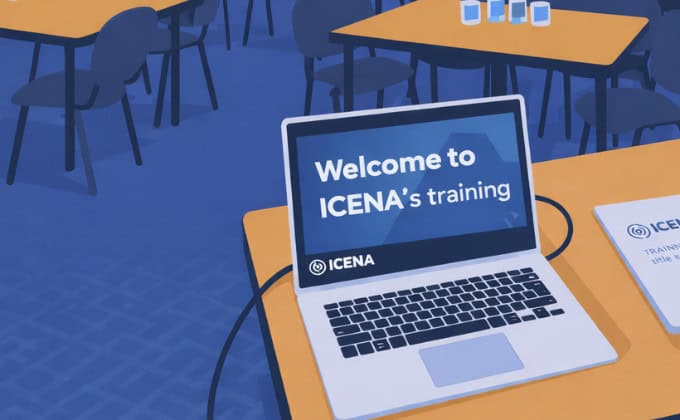
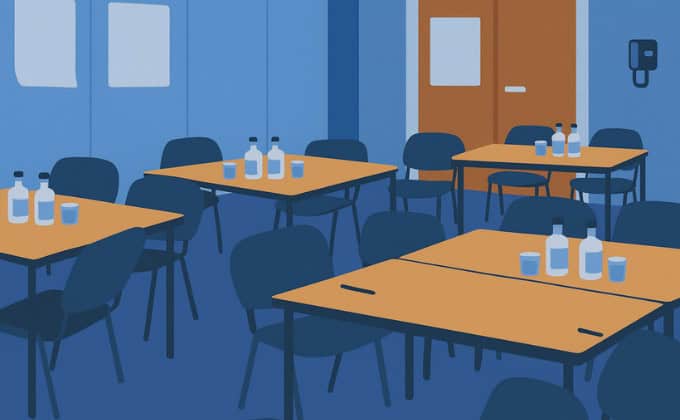
The way we arrange our training space reflects our values. Where possible, the room will be set up in small hubs of 4–5 people, with multiple hubs spread around the space. This layout encourages connection, collaboration and peer support while still keeping discussions at a comfortable scale.
We also recognise the importance of personal wellbeing during training. The hubs are intentionally arranged to allow people to step out of the room quietly and without disruption if they need time to look after themselves. In addition, there will always be a quiet space available outside the training room. If at any point you feel impacted by the content, or simply need time to care for yourself, you are welcome to leave and use this space in whatever way supports you best.
Collective Care Agreement
At the start of every session, we co-create a Collective Care Agreement. This is a shared set of commitments that help us build a space where everyone feels safe, respected and able to participate.
Please take care of yourself:
Some of the topics we cover involve exploring the realities of oppression, harmful behaviours and their impacts. Please take care of yourself in whatever way you need. This may include stepping out, taking a break, or using the quiet space provided. You are always welcome to do this without needing to explain.
Please be mindful of others:
Our experiences shape the way we show up in the room. Statistics tell us that there will be survivors amongst us, as in any space. Please hold this in mind when contributing to discussions. Respectful listening and care are essential. While it’s okay to challenge ideas, we ask that this is always done with compassion.
Participation:
Our training is interactive, and it works most effectively when you can be actively present in the way that feels right for you. Please try to minimise distractions where possible so you can engage fully, but always in a manner that supports your comfort and capacity. Everything we do in training is an invitation, not an obligation. You will never be asked to contribute unless you would like to. Activities may involve group discussion, but there will always be individual reflective options for those who prefer to engage quietly or independently.
Focus:
We recognise that focus looks different for everyone, and all forms of focus are welcome in this space. Whether you concentrate best by doodling, standing up and moving around the room, or simply by listening quietly, you are encouraged to engage in whatever way supports your learning.
Take what works, leave what doesn’t
Everyone’s needs are different. Please take from the training what is useful to you, and leave behind anything that doesn’t.
Confidentiality:
We will never ask you to share your own story or experiences. If you choose to, it can be valuable for the group, but please don’t share information that could identify others. What’s shared in the space stays in the space; the learning is what we take away.
Ongoing Reflection and Learning
We are committed to continuously improving our practice. We use evaluation surveys and reflective practice as a training team to ensure our approach remains relevant, accessible and impactful.
Accessibility
Accessibility is a top priority to us. Because of this, we do the following:
- Share training content in workbooks ahead of the session.
- Provide copies of training materials on green or yellow paper upon request.
- Follow best practice for accessible slide deck creation.
- Adhere to the training agenda and scheduled break times.
- Encourage different ways of focusing, such as doodling, using fidget tools, or walking around the room.
If you have any additional accessibility requirements, please contact us ahead of time so we can ensure your needs are fully supported.
Get In Touch
At ICENA, we’re a non-profit social enterprise that provides training and consultancy services. Our aim is to change attitudes, beliefs, and practices, and to promote equal access to resources and opportunities. We offer practical and interactive training or consultancy that’s tailored to the specific needs of your organisation. With many years of experience in the sexual violence, health, and well-being sectors, we provide comprehensive and evidence-based services with measurable results.
Please note that we are not a frontline organisation. If you or someone you know needs urgent help following a sexual assault, visit the Rape Crisis website for a list of services that will be able to help you.